
Performance and Powertrain
The first arena where the Tesla Model S Plaid and the Porsche electric offering (the Taycan Turbo S) clash is raw propulsion. Tesla’s tri-motor layout delivers a burst of acceleration that feels almost cinematic, while Porsche’s dual-motor architecture emphasizes a more measured, track-ready delivery of power. Both manufacturers have embraced permanent-magnet synchronous motors, but they have tuned them for different philosophies.
Driving the Model S Plaid feels like unleashing a high-octane rocket: the car rockets from a standstill to highway speed in a time that most supercars struggle to match. Porsche, on the other hand, builds its acceleration around a seamless torque curve that maintains composure through each gear-less shift, giving the driver a sense of precision rather than sheer brute force.
Both machines feature sophisticated thermal-management systems that keep the batteries at optimal temperatures during hard runs. Tesla relies on an active liquid-cooling loop that circulates coolant through the pack and motors, while Porsche employs a combination of liquid cooling and a heat-pump system that also assists with cabin heating, improving overall efficiency.
In terms of range, the Model S Plaid typically edges ahead thanks to its larger battery capacity and a drivetrain optimized for low-drag cruising. Porsche’s Taycan, however, compensates with a regenerative braking strategy that feels more natural to drivers accustomed to traditional sports cars, and its fast-charging network in Europe provides a compelling convenience factor.
Design Language and Interior Craftsmanship
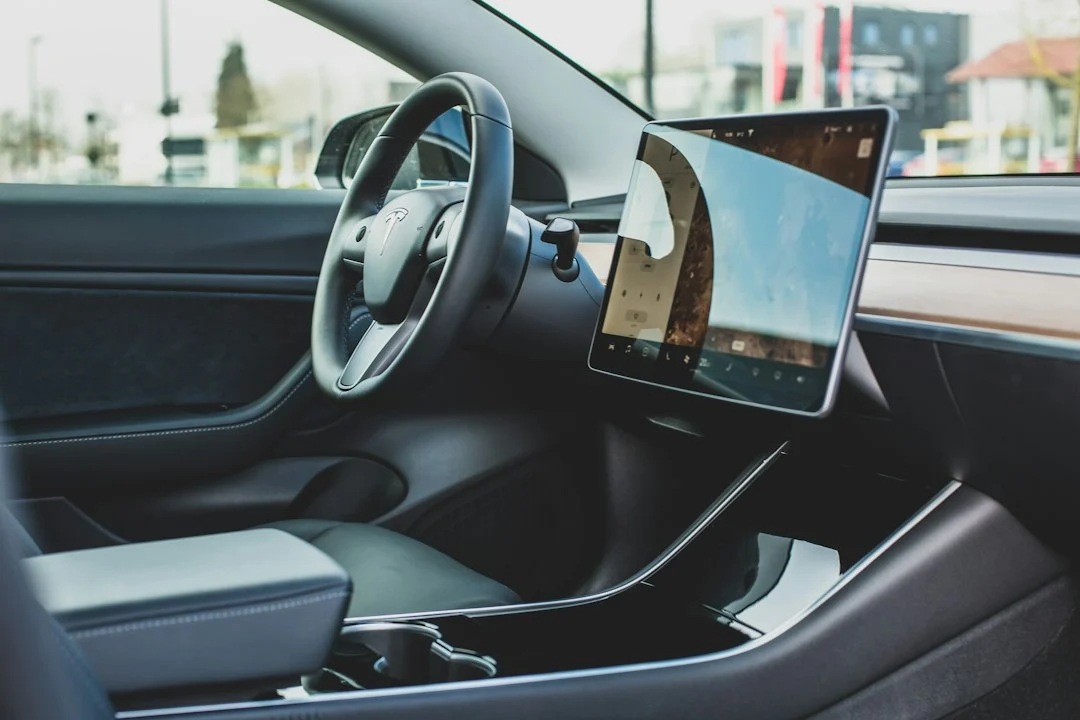
When you step inside a Tesla Model S Plaid, you are greeted by a minimalist cabin dominated by a massive horizontal touchscreen that controls virtually every vehicle function. The design is deliberately austere, with few physical buttons, a sleek dashboard, and a panoramic glass roof that creates an airy atmosphere.
Porsche’s interior, by contrast, leans heavily on tactile luxury. High-grade leather, brushed aluminum, and optional carbon-fiber trim create a cockpit that feels both sporty and refined. The instrument cluster is a blend of analog-inspired dials and a crisp digital display, offering a more traditional driver-focused experience.
Both cars incorporate advanced driver-assist suites. Tesla’s Autopilot and Full-Self-Driving (FSD) software provide a suite of features that evolve through over-the-air updates, while Porsche’s Advanced Cruise Control and Parking Assist are rooted in the brand’s long-standing emphasis on driver engagement and safety.
In the luxury segment, material quality is paramount. Tesla’s use of vegan leather and sustainably sourced fabrics appeals to eco-conscious buyers, whereas Porsche’s hand-stitched leather and optional bespoke interior packages cater to those who value artisanal craftsmanship.
Technology and Connectivity
Connectivity is a battlefield where Tesla has long held the upper hand. The Model S Plaid’s infotainment system runs on a custom Linux platform, delivering instant updates, streaming services, and a suite of third-party apps directly to the central screen. The vehicle’s integration with the Tesla mobile app allows owners to monitor charging, climate, and location from anywhere.
Porsche’s infotainment, built on the latest version of the Porsche Communication Management (PCM) system, offers a more conventional approach with a vertically oriented touchscreen, rotary knob, and voice control. While it may lack the sheer breadth of Tesla’s app ecosystem, it excels in providing a polished, intuitive user experience that aligns with the brand’s performance heritage.
Both cars support over-the-air updates, but Tesla’s updates are more frequent and often introduce new features that were not available at launch. Porsche’s updates tend to be more incremental, focusing on refining existing systems rather than adding radical new capabilities.
Charging Infrastructure and Ownership Experience
The practicality of an electric luxury sedan hinges on the availability and speed of charging. Tesla’s Supercharger network is a proprietary, globally recognized system that offers high-power DC fast charging with a seamless payment experience tied to the vehicle’s account. The network’s density in many regions makes long-distance travel feel effortless for Model S owners.
Porsche relies on the broader public DC fast-charging ecosystem, primarily using the CCS standard. While this opens access to a wide variety of stations, the experience can be less unified than Tesla’s, requiring separate apps or cards for payment and sometimes resulting in variable charging speeds.
Both manufacturers provide home-charging solutions that integrate with smart-home ecosystems, allowing owners to schedule charging during off-peak hours to reduce electricity costs. Tesla’s Wall Connector and Porsche’s Mobile Charger both support high-power AC charging, but Tesla’s solution typically offers a slightly higher maximum rate.
Driving Dynamics and Handling
Handling is where the philosophical divide between the two marques becomes most apparent. Tesla’s suspension is adaptive, using air springs and active dampers that can adjust ride height and stiffness on the fly. This setup provides a comfortable ride for daily commuting while still allowing the Plaid to exhibit impressive cornering stability when the driver demands it.
Porsche’s Taycan, true to its sports-car lineage, employs a double-wishbone front suspension and a multi-link rear setup, paired with an optional rear-axle active anti-roll bar. The result is a chassis that feels planted and responsive, delivering a feedback-rich experience that rewards driver input.
Steering feel also differs markedly. Tesla’s steer-by-wire system offers a light, precise feel that can be tuned for comfort or sport mode, whereas Porsche’s hydraulic-assisted steering maintains a more traditional, tactile connection to the road, appealing to purists who value direct feedback.
Brand Heritage and Emotional Appeal
Beyond specs, the emotional resonance of a brand influences the purchasing decision. Tesla represents disruption, a forward-looking narrative that aligns with a vision of sustainable mobility and technological progress. Owners often cite the sense of being part of a pioneering movement as a key motivator.
Porsche, on the other hand, carries a legacy of motorsport triumphs and a reputation for engineering excellence. The brand’s electric models aim to translate that heritage into the silent realm of electric propulsion, preserving the visceral thrill associated with a Porsche behind the wheel.
For collectors, the Model S Plaid may be viewed as a milestone in the evolution of electric sedans, while the Taycan could be seen as a bridge between classic sports-car DNA and modern electrification.
Pricing and Value Proposition
Both vehicles occupy the upper echelon of the luxury market, and their price points reflect that status. The Model S Plaid’s pricing structure tends to be more transparent, with fewer optional packages that dramatically alter the final cost. Porsche, conversely, offers an extensive menu of bespoke options—ranging from custom paint finishes to performance upgrades—that can quickly elevate the purchase price.
When evaluating value, buyers must consider not only the upfront cost but also the total cost of ownership. Tesla’s lower energy consumption per mile and its extensive Supercharger network can reduce operating expenses, whereas Porsche’s higher efficiency in certain driving conditions and its potential for higher resale values may offset the initial premium.
Environmental Impact and Sustainability
Both manufacturers tout their commitment to sustainability, yet they approach it differently. Tesla emphasizes a closed-loop battery recycling program and the use of renewable energy in its factories. Porsche highlights its use of responsibly sourced materials in interior trims and its efforts to offset production emissions through carbon-neutral initiatives.
From a lifecycle perspective, the larger battery pack in the Model S Plaid may result in a higher upfront environmental footprint, but its greater range can translate to fewer charging cycles over the vehicle’s lifespan. Porsche’s smaller pack, paired with efficient regenerative braking, may offer a lower per-kilometer impact in city driving scenarios.
Key Takeaways
- Acceleration: Tesla delivers blistering straight-line speed, while Porsche offers balanced, track-focused launch.
- Interior philosophy: Minimalist tech-centric cabin versus tactile, driver-oriented luxury.
- Charging ecosystem: Proprietary Supercharger network versus broader CCS compatibility.
- Driving dynamics: Adaptive comfort suspension versus sport-tuned chassis.
- Brand narrative: Disruptive innovation versus heritage performance.
FAQ
Which electric luxury sedan accelerates faster from 0-60 mph?
The Tesla Model S Plaid typically reaches 0-60 mph in a shorter time than the Porsche Taycan Turbo S, thanks to its three-motor configuration and higher peak power output.
Do both cars support over-the-air software updates?
Yes, each model receives over-the-air updates that can improve performance, add features, or refine existing systems without requiring a service visit.
How does the charging speed compare between the two?
Tesla’s Supercharger network can deliver very high DC power, often exceeding the peak rates available at most public CCS stations used by Porsche, though actual speeds depend on the specific charger and battery state.
Is the interior of the Model S Plaid more sustainable than the Taycan’s?
Tesla uses vegan leather and recycled fabrics, which appeal to environmentally conscious buyers, while Porsche offers premium leather and optional sustainable materials, catering to traditional luxury expectations.
Which vehicle offers a more engaging driving experience?
Porsche’s Taycan is engineered to provide a driver-focused feel with precise steering and a sport-tuned suspension, whereas Tesla emphasizes a blend of comfort and raw acceleration, which some may find less engaging on a curvy road.
Can I expect similar resale values for both models?
Both retain value well within the luxury segment, though Porsche’s historic brand cachet often translates to strong resale performance, while Tesla’s rapid technology updates can influence depreciation patterns.
Are there differences in warranty coverage for the battery?
Both manufacturers offer extensive battery warranties that cover a large number of years or miles, providing confidence in long-term ownership, though the exact terms differ by market.
Conclusion
Choosing between the Tesla Model S Plaid and the Porsche Taycan Turbo S ultimately hinges on what the buyer prioritizes. If sheer acceleration, a streamlined digital cockpit, and an integrated charging ecosystem are paramount, Tesla presents a compelling case. Conversely, those who value a heritage-rich brand, a driver-centric chassis, and a tactile, luxurious interior may find Porsche’s offering more aligned with their expectations. Both cars embody the pinnacle of electric luxury, each interpreting performance, technology, and sustainability through a distinct lens. The decision, therefore, becomes a reflection of personal taste as much as a comparison of specifications.


