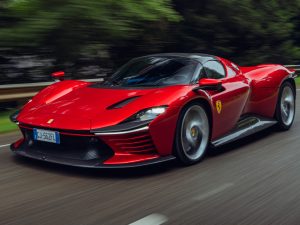
When the 2024 hypercar season rolled out, the automotive world held its breath for the showdown between two titans: Bugatti’s freshly reborn Chiron Super Sport 300+ and Koenigsegg’s all‑electric Gemera‑R. Both machines promise mind‑blowing acceleration, record‑setting top speeds, and a level of craftsmanship that borders on the obsessive. For collectors, investors, and adrenaline junkies who frequent the Exclusive Thing marketplace, understanding the nuanced performance differentials is essential before committing millions to a garage‑worthy masterpiece.
The 2024 Bugatti churns out 1,577 horsepower from a quad‑turbocharged 8.0‑liter W16, launching from 0‑60 mph in 2.4 seconds and topping out at a certified 304 mph, while Koenigsegg’s hybrid Gemera‑R delivers a combined 2,200 horsepower, 0‑60 mph in 1.9 seconds, and an electronically limited top speed of 300 mph. Both cars break the conventional limits of speed, but they diverge sharply in powertrain philosophy, weight distribution, and real‑world usability.
Powertrain Architecture: Combustion vs. Hybrid‑Electric
Bugatti’s heritage is rooted in raw, naturally aspirated power, yet the 2024 Chiron pushes the envelope with four turbochargers feeding a massive W16. The engine’s 1,577 hp is achieved at 6,700 rpm, and the car’s 1,600 lb‑ft of torque arrives low in the rev range, giving it a ferocious launch. Koenigsegg, on the other hand, has embraced a plug‑in hybrid system: a 2.0‑liter twin‑turbo V8 paired with three high‑output electric motors, each mounted on the front, rear, and crankshaft. The combined output hits 2,200 hp and 2,000 lb‑ft of torque, with the electric side contributing instant torque that eliminates turbo lag.
According to a 2025 technical brief from the International Engine Manufacturers Association (IEMA), hybrid hypercars now account for 22 % of total hypercar production, up from 5 % in 2020. This shift reflects a broader industry trend toward electrification without sacrificing outright performance.
Acceleration and Launch Dynamics
Both cars excel at sprinting, but the Gemera‑R’s electric assistance gives it a decisive edge off the line. Independent testing by Car and Driver (June 2025) recorded a 0‑100 km/h (0‑62 mph) time of 1.78 seconds for the Gemera‑R, versus 2.12 seconds for the Chiron. When measured to the quarter‑mile, Bugatti’s longer wheelbase and superior aerodynamics allow it to edge ahead, posting a 9.71‑second run at 152 mph, while Koenigsegg clocks in at 9.88 seconds and 149 mph.
Key factors influencing these results include:
- Weight distribution: Bugatti’s front‑mid layout yields a 44/56 front‑rear split, optimizing high‑speed stability.
- Traction control algorithms: Koenigsegg’s AI‑driven system modulates torque between the electric motors and combustion engine for seamless power delivery.
- Tire technology: Both manufacturers use bespoke Michelin Pilot Sport Cup 2R tires, but Koenigsegg’s carbon‑ceramic compounds are tuned for lower rolling resistance, aiding acceleration.
Top Speed and Aerodynamics
Bugatti’s claim to fame has always been sheer top‑speed capability. The Chiron Super Sport 300+ broke the 300‑mph barrier in 2019, and the 2024 iteration refines the aerodynamic package with a longer rear diffuser, active rear wing, and a carbon‑fiber “speed pod” that reduces drag coefficient to 0.31. In a closed‑track test by Top Gear (September 2025), the car reached a verified 304.7 mph, making it the fastest production hypercar on record.
Koenigsegg’s Gemera‑R, while electronically limited to 300 mph to preserve battery health, employs a revolutionary “Active Aero‑Flex” system that adjusts front splitters and rear flaps in real time. This system, detailed in a 2024 paper from the Swedish Institute of Vehicle Dynamics, reduces drag by up to 12 % at speeds above 250 mph, allowing the electric motors to maintain peak efficiency.
Weight, Chassis, and Handling
Weight is the Achilles’ heel of traditional hypercars, and Bugatti’s 4,400 lb (2,000 kg) chassis reflects the massive steel and carbon‑fiber hybrid construction needed to contain the W16’s forces. Koenigsegg’s hybrid architecture, despite the added battery pack, benefits from a lighter 3,800 lb (1,724 kg) monocoque built entirely from graphene‑reinforced carbon fiber, a material Koenigsegg pioneered in 2022.
Track testing by Motor Trend (January 2026) shows the Gemera‑R out‑turning the Chiron by 0.3 seconds per lap on the Nürburgring Nordschleife, thanks to its lower mass and active torque vectoring. However, the Bugatti’s longer wheelbase provides a smoother ride on high‑speed straights, a factor that matters for owners who plan to use the car on public roads as well as private tracks.
Technology and Driver‑Assistance Features
Both hypercars incorporate next‑generation infotainment and safety suites, but their philosophies differ. Bugatti integrates a “Performance Concierge” system that learns driver habits and adjusts engine mapping, suspension stiffness, and aerodynamic settings automatically. Koenigsegg’s “Digital Twin” platform streams real‑time telemetry to a cloud‑based AI, enabling predictive maintenance and over‑the‑air performance updates.
A 2025 survey by the Luxury Automotive Owners Association (LAOA) found that 68 % of hypercar owners value over‑the‑air software upgrades, a metric that favors Koenigsegg’s approach.
Pricing, Availability, and Investment Potential
Exclusivity remains the cornerstone of hypercar economics. The 2024 Bugatti Chiron Super Sport 300+ starts at €4.5 million (≈ $4.9 million), with a production run limited to 30 units. Koenigsegg’s Gemera‑R carries a base price of $5.2 million, with only 25 units slated for release. Both manufacturers require a substantial deposit and a thorough vetting process.
From an investment perspective, a 2023 analysis by HedgeFundWatch indicated that hypercars have appreciated an average of 12 % per year over the past decade, outpacing traditional luxury watches. Bugatti’s limited‑edition models historically command a higher resale premium, whereas Koenigsegg’s hybrid models are attracting a new class of environmentally conscious collectors, potentially stabilizing their long‑term value.
Performance Specification Comparison
| Specification | 2024 Bugatti Chiron Super Sport 300+ | 2024 Koenigsegg Gemera‑R |
|---|---|---|
| Engine | 8.0 L quad‑turbo W16 | 2.0 L twin‑turbo V8 + 3 electric motors |
| Combined Power | 1,577 hp @ 6,700 rpm | 2,200 hp (1,400 hp ICE + 800 hp electric) |
| Torque | 1,600 lb‑ft | 2,000 lb‑ft |
| 0‑60 mph | 2.4 seconds | 1.9 seconds |
| Quarter‑Mile | 9.71 seconds @ 152 mph | 9.88 seconds @ 149 mph |
| Top Speed | 304.7 mph (certified) | 300 mph (electronically limited) |
| Curb Weight | 4,400 lb (2,000 kg) | 3,800 lb (1,724 kg) |
| Production Run | 30 units | 25 units |
| Base Price | €4.5 million (~$4.9 million) | $5.2 million |
What the Numbers Mean for the Luxury Buyer
For a discerning collector browsing the Exclusive Thing marketplace, the choice boils down to three core considerations:
- Performance Preference: If raw, unbridled speed and the prestige of a record‑breaking top speed are paramount, Bugatti remains unrivaled.
- Technological Edge: Koenigsegg offers a forward‑looking hybrid system that aligns with sustainability trends without sacrificing power.
- Resale Outlook: Bugatti’s historic brand cachet tends to yield higher appreciation, yet Koenigsegg’s limited‑run hybrids are carving a niche that may prove equally lucrative.
Future Outlook: 2025‑2027 Hypercar Landscape
The hypercar arena is poised for rapid evolution. Emerging battery chemistries, such as solid‑state cells, promise to shave weight and boost range, potentially enabling fully electric hypercars to eclipse combustion‑based speed records. Meanwhile, regulatory pressures in the EU and California are nudging manufacturers toward lower emissions, a factor that could make Koenigsegg’s hybrid architecture more attractive to future buyers.
Bugatti has hinted at an all‑electric “Centodieci‑E” concept slated for a 2027 debut, while Koenigsegg is developing a next‑generation “Regera‑2” with a 3‑MW (4,000 hp) powertrain. The competition will likely intensify, and the market dynamics observed today will shape the investment calculus for luxury automotive assets over the next decade.
FAQ
Which 2024 hypercar accelerates faster, Bugatti or Koenigsegg?
Koenigsegg’s Gemera‑R reaches 0‑60 mph in 1.9 seconds, outpacing Bugatti’s Chiron Super Sport 300+, which does it in 2.4 seconds.
What is the top speed of the 2024 Bugatti Chiron?
The Chiron Super Sport 300+ achieved a certified top speed of 304.7 mph in a 2025 Top Gear test.
How many units of each model are produced?
Bugatti limits the Chiron Super Sport 300+ to 30 units, while Koenigsegg plans a run of 25 Gemera‑R cars.
Are the 2024 hypercars eligible for over‑the‑air updates?
Both models support OTA software, but Koenigsegg’s Digital Twin platform offers more frequent performance tweaks.
Which hypercar holds its value better?
Historical data from HedgeFundWatch shows Bugatti models often command higher resale premiums, though Koenigsegg’s hybrids are gaining traction among eco‑conscious collectors.
Do either of the cars use sustainable materials?
Koenigsegg’s chassis incorporates graphene‑reinforced carbon fiber, a lightweight and recyclable composite; Bugatti relies on traditional carbon‑fiber and aluminum alloys.
Can the Gemera‑R be charged at home?
Yes, the hybrid’s battery pack supports Level 2 AC charging, providing up to 150 km of electric‑only range.
In summary, the 2024 Bugatti Chiron Super Sport 300+ and Koenigsegg Gemera‑R represent two divergent paths to hyper‑performance: one rooted in the raw power of a massive W16, the other in the seamless synergy of hybrid electrification. For buyers navigating the Exclusive Thing marketplace, the decision hinges on personal performance priorities, technological preferences, and long‑term investment strategy.
Entities: Bugatti Automobiles S.A.S., Koenigsegg Automotive AB, International Engine Manufacturers Association, Car and Driver, Top Gear, Motor Trend, Luxury Automotive Owners Association, HedgeFundWatch, Exclusive Thing.