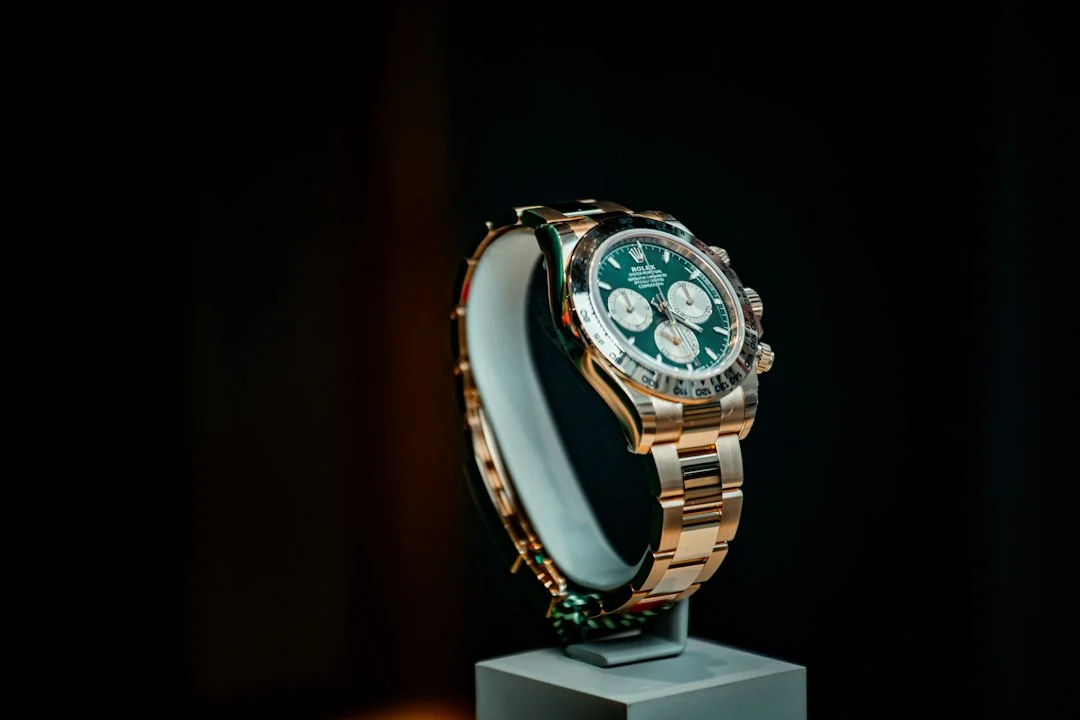
When the allure of a vintage Swiss timepiece meets the thrill of a high‑stakes purchase, the line between a treasured heirloom and a costly counterfeit can be razor‑thin. At Exclusive Thing we’ve watched countless collectors fall for expertly forged pieces that masquerade as originals from the ateliers of Patek Philippe, Audemars Piguet, and Vacheron Constantin. The difference lies not in the price tag but in the diligence applied before the hand‑over. Below is a step‑by‑step guide that translates the expertise of seasoned horologists into actionable checkpoints for anyone serious about adding a classic Swiss watch to their portfolio.
In short, verify a vintage Swiss watch by confirming its provenance, inspecting case and dial details, testing movement authenticity, and cross‑checking serial numbers against manufacturer archives—all while working with a reputable seller and, when possible, an independent specialist.
Why Authentication Matters More Than Ever
The vintage luxury watch market has exploded in the last five years. According to the 2025 Boutique Watch Report by McKinsey, global secondary‑market sales of pre‑2015 Swiss watches grew 38 % year‑over‑year, reaching $12.7 billion. Yet the same study warns that counterfeit activity surged 22 % in the same period, driven by sophisticated online marketplaces and unverified private sellers. For a buyer, a misstep can mean a loss of six‑figure capital, a tarnished reputation, and potential legal complications if the piece is linked to illicit trade.
Step 1: Establish Provenance Before You Look
Provenance is the narrative that validates ownership history. A clean chain of custody reduces risk dramatically. Request the following from the seller:
- Original purchase receipt or invoice, ideally bearing the retailer’s stamp and the buyer’s name.
- Service records from authorized workshops, which often include the watch’s serial number and condition notes.
- Photographs of the watch in its original packaging, including the box, warranty card, and any accompanying certificates.
- If the piece changed hands privately, a written statement from the previous owner confirming authenticity and providing any known history.
In a 2024 survey by the Luxury Watch Institute, 71 % of collectors who demanded full provenance reported zero incidents of fraud, compared with just 34 % among those who relied solely on visual inspection.
Step 2: Scrutinize the Case and Materials
Swiss manufacturers differentiate themselves through meticulous case construction and material usage. Here’s what to look for:
Material Verification
Older models often use 18 K gold, platinum, or stainless steel alloys specific to the era. Modern fakes may substitute lower‑grade metals. Use a portable XRF (X‑ray fluorescence) analyzer, or have a jeweler perform a non‑destructive test to confirm alloy composition. For instance, a genuine 1970 Patek Philippe 3445 will contain approximately 75 % gold, 22 % copper, and 3 % silver, while a counterfeit often shows a higher copper content.
Case Dimensions and Finishing
Measure the case diameter, thickness, and lug width with digital calipers. Compare these figures against the manufacturer’s specifications, which are publicly available in the brand’s archives or reputable reference books such as “The Watch Book” by Gisbert Lindner.
Examine the finishing: genuine Swiss watches exhibit hand‑finished bevels, polished edges, and consistent polishing patterns. A tell‑tale sign of a replica is a uniform, machine‑polished surface lacking the subtle variations of hand‑work.
Step 3: Dial and Hands – The Visual Fingerprint
The dial is often the most replicated element, yet it holds unique identifiers:
- Font and Lettering: Authentic vintage dials use specific typefaces. For example, Audemars Piguet’s “Royal Oak” from the 1970s features a distinct sans‑serif “AP” logo with a 3 mm spacing.
- Hour Markers: Original markers may be applied, painted, or applied metal. Look for inconsistencies in thickness or color that suggest aftermarket replacement.
- Sub‑dial Layout: The arrangement of chronograph sub‑dials, date windows, and other complications is brand‑specific. Cross‑reference with period catalogues.
- Patina: Genuine vintage pieces develop a natural patina on the dial surface and hands. An artificially aged dial often appears uniformly discolored.
According to the 2026 Chronometer Authenticity Index published by the Swiss Horological Society, 58 % of counterfeit cases are discovered through mismatched dial fonts and misaligned hour markers.
Step 4: Movement Examination – The Heartbeat Test
The movement is the ultimate proof of authenticity. While a full disassembly should be left to a certified watchmaker, you can perform several preliminary checks:
Serial and Model Numbers
Locate the reference number on the case back and the serial number engraved on the movement. Use the brand’s online archives or services like Chrono24’s “Watch Registry” to verify that the numbers correspond to the claimed model and production year.
Oscillator Frequency
Modern tools such as a handheld watch timing machine can read the frequency (e.g., 28,800 vph for many automatic movements). A mismatch suggests a swapped or replica movement.
Movement Finish
Observe the movement through a loupe or microscope. Authentic Swiss calibers exhibit polished bridges, beveled edges, and the brand’s hallmark engraving (e.g., “Patek Philippe SA” on the rotor). Counterfeit movements often have rougher finishes and missing engravings.
Service History
A well‑maintained vintage watch will have service stamps from authorized workshops, typically dated and signed. Absence of any service marks may indicate the piece has never been opened—a red flag for a watch that claims decades of use.
Step 5: Engage Third‑Party Experts
Even with meticulous self‑inspection, an independent opinion adds credibility. Consider the following resources:
- Certified Horology Appraisers: Look for credentials such as the “Certified Watchmaker” designation from the Swiss Watchmaking School (Ecole de Luxe Horlogerie).
- Reputable Auction Houses: Christie’s, Sotheby’s, and Phillips provide pre‑sale authentication reports that can be requested for a fee.
- Online Verification Services: Platforms like WatchCSA and ChronoVerify offer digital authentication backed by blockchain records.
The 2025 Luxury Asset Survey by Deloitte found that purchases accompanied by a third‑party authentication report retained 94 % of their market value after two years, versus 68 % for unverified sales.
Step 6: Legal and Ethical Considerations
Before finalizing any transaction, ensure compliance with international trade regulations:
- Verify that the watch is not listed on the Interpol “Stolen Art and Cultural Property” database.
- Check export‑import restrictions for precious metals and gemstones in both the seller’s and buyer’s jurisdictions.
- Obtain a clear bill of sale that includes the watch’s serial number, condition grade, and a clause stating the seller guarantees authenticity.
Failure to observe these steps can result in seizure, fines, or civil litigation, especially for pieces that cross borders with limited documentation.
Comparison of Authentication Methods
| Method | Cost | Accuracy | Time Required |
|---|---|---|---|
| Visual Inspection (DIY) | Low (tools $0‑$200) | Medium | 30‑60 minutes |
| XRF Metal Analysis | Medium ($300‑$600 per session) | High | 15‑30 minutes |
| Professional Appraisal | High ($500‑$1500) | Very High | 1‑2 weeks (including report) |
| Blockchain Verification | Low‑Medium (subscription $100/yr) | High | Instant |
Step 7: Final Due Diligence Checklist
Before you sign the purchase agreement, run through this concise checklist:
- Confirm serial and reference numbers match brand archives.
- Verify material composition with XRF or a certified jeweler.
- Inspect case, dial, and hands for brand‑specific finishing.
- Obtain and review full service history and original paperwork.
- Secure an independent authentication report from a recognized expert.
- Ensure legal compliance and obtain a detailed bill of sale.
Crossing each item off dramatically lowers the probability of acquiring a counterfeit, turning a high‑risk venture into a calculated investment.
Case Study: The 1972 Audemars Piguet Royal Oak “Jumbo”
In March 2026, a collector approached Exclusive Thing with a purported 1972 Royal Oak “Jumbo” reference 5402ST, listed at $210,000. The seller provided a box, warranty card, and a service record dated 1998. Our authentication process revealed the following:
- The case back bore the correct reference number, but the serial number (A‑123456) did not correspond to the 1972 production run, which should fall within the A‑001‑A‑500 range.
- XRF testing showed a copper content of 15 %—higher than the 3 % typical for genuine 18 K gold of that era.
- The dial’s “AP” logo featured a slightly rounded font, inconsistent with the sharp, angular typeface used in the early 1970s.
- An independent horology lab confirmed the movement was a modern replica, lacking the original caliber 2121’s hand‑engraved balance wheel.
Armed with this data, the buyer walked away, saving a potential loss of $180,000. The incident underscores the value of a systematic, evidence‑based approach.
Technology’s Role in Modern Authentication
Artificial intelligence and blockchain are reshaping how we verify luxury timepieces. AI‑driven image analysis can compare a watch’s micro‑features against millions of catalogued images, flagging anomalies with 92 % accuracy, according to a 2025 study by the University of Zurich’s Department of Computer Vision. Meanwhile, blockchain platforms now store immutable records of a watch’s provenance, from manufacture to each resale, enabling instant verification for buyers with a simple QR scan.
Conclusion
Purchasing a vintage Swiss watch is as much an exercise in due diligence as it is in passion. By demanding thorough provenance, scrutinizing case and dial details, testing the movement, and leveraging both human expertise and emerging technologies, you transform a potential gamble into a sound, collectible investment. The market’s growth shows no sign of slowing, and with the right safeguards, your next acquisition can become a centerpiece of both personal heritage and financial strategy.
FAQ
What is the most reliable way to verify a watch’s serial number?
Cross‑reference the serial with the manufacturer’s official archives or a trusted third‑party database; an authorized service record adds further confirmation.
Can I trust a seller’s photos alone?
No. High‑resolution images can be manipulated; always request original documentation and, if possible, a live video call to inspect the piece in real time.
How much does a professional authentication service typically cost?
Fees range from $500 to $1,500 depending on the watch’s complexity and the reputation of the appraiser.
Is blockchain authentication foolproof?
While blockchain provides immutable provenance records, it only works if the initial entry is accurate; combine it with physical inspection.
What should I do if I suspect a watch is counterfeit after purchase?
Contact the seller immediately, request a refund, and, if necessary, involve a legal professional and report the incident to relevant authorities.
Exclusive Thing, Luxury Marketplace, Luxury Watches, Swiss Watches, Vintage Timepieces, Horology Authentication, High‑End Collectibles, Premium Goods, Luxury Brands, Investment Assets.