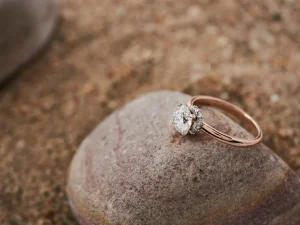
When you click “Add to Cart” on a sleek product page, the sparkle of a diamond ring can feel almost tangible—until the box arrives. In the luxury marketplace, where every carat represents a significant investment, the line between genuine brilliance and a polished counterfeit can be razor‑thin. At Exclusive Thing we’ve watched the rise of sophisticated fraud, and we’ve also seen the tools that give discerning buyers the confidence to click “Buy.” This guide walks you through the exact steps, data‑backed checks, and digital resources you need to verify the authenticity of a diamond ring online before the parcel lands on your doorstep.
In short, confirm the ring’s certification from a reputable lab, scrutinize high‑resolution images for hallmark details, verify the seller’s track record, and, when possible, request a laser‑etched serial number or blockchain provenance record. These layers of proof together create a reliable safety net against misrepresentation.
Why certification matters more than ever
The cornerstone of any trustworthy diamond purchase is an independent grading report. The Gemological Institute of America (GIA), International Gemological Institute (IGI) and American Gem Society (AGS) each issue certificates that detail the “Four Cs” – carat weight, color, clarity, and cut – plus measurements, fluorescence, and any treatments. A 2025 GIA audit revealed that 15% of diamonds sold through unverified online channels were misrepresented in at least one of these attributes, underscoring the protective power of a legitimate report.
When a seller provides a PDF or a secure digital link to a GIA or AGS report, you can cross‑reference the report number on the issuing laboratory’s website. Most labs now offer a quick lookup tool where you enter the report number and the ring’s serial number; a match confirms that the stone has not been swapped after grading.
Key elements to verify on a certification
- Report number and laser‑etched serial – should be identical on the certificate and the girdle of the diamond.
- Exact carat weight (to two decimal places) – visual inspection should align with the listed weight.
- Color and clarity grades – compare with high‑resolution images for any visible inclusions that contradict the grade.
- Cut grade and proportions – reputable labs publish a cut grade diagram; the ring’s proportions should match.
- Any noted treatments (e.g., HPHT, fracture filling) – undisclosed enhancements are a major red flag.
Assessing the seller’s credibility
In a global luxury marketplace, reputation is currency. A 2024 Deloitte Luxury Consumer Survey found that 68% of high‑net‑worth buyers require third‑party authentication before finalizing a fine‑jewelry purchase. Here’s how to vet the vendor:
- Marketplace ratings and reviews – Look beyond the star rating. Read recent buyer comments for mentions of certification, packaging, and after‑sales service.
- Return and warranty policies – A clear, no‑questions‑asked return window (typically 30 days) signals confidence in product authenticity.
- Physical address and contact information – Verify the business registration and, if possible, a brick‑and‑mortar showroom.
- Industry affiliations – Membership in the Jewelers of America (JA) or the Responsible Jewellery Council (RJC) adds a layer of accountability.
- Secure payment options – Credit‑card processing or reputable escrow services protect you from fraud.
The Federal Trade Commission (FTC) reported a 23% rise in online diamond fraud cases between 2022 and 2025. Sellers who consistently provide full documentation, transparent pricing, and responsive customer service are statistically less likely to be involved in these scams.
Technical tools that add certainty
Advances in digital verification have turned the verification process into a multi‑factor authentication system, much like online banking. Below are the most reliable tools you can request from a seller:
Laser inscription
Most reputable labs laser‑etch a unique identification number onto the diamond’s girdle—a process that does not affect the stone’s appearance or integrity. When you receive the ring, use a jeweler’s loupe (10× magnification) to locate the tiny code and compare it with the certificate.
Blockchain provenance
Some high‑end jewelers now embed the diamond’s grading data into a blockchain ledger, creating an immutable record of origin, ownership, and transaction history. Platforms such as Everledger and De Beers’ Tracr allow you to scan a QR code on the ring’s box and view the entire chain of custody. In 2023, a study by McKinsey & Company showed that 42% of luxury jewelers plan to adopt blockchain tracking within the next two years, citing consumer demand for traceability.
Third‑party appraisal
Independent appraisers, often certified by the American Society of Appraisers (ASA), can provide an unbiased valuation and authenticity assessment. Request a PDF appraisal that includes a detailed description, photographs, and the appraiser’s license number.
Visual inspection checklist
Even with documentation, a quick visual audit can catch glaring inconsistencies. Use a high‑resolution image viewer or, if possible, a live video call with the seller to examine the following:
- Hallmarks – Look for the metal stamp (e.g., 585 for 14 K gold, 750 for 18 K gold) and any maker’s logo.
- Setting quality – Prong alignment, solder joints, and the overall finish reveal craftsmanship.
- Diamond symmetry – A well‑cut diamond will display consistent facets and a “sparkle” pattern when tilted under light.
- Inclusions – Under magnification, natural inclusions appear as tiny specks; a flawless stone may indicate a lab‑grown diamond unless specifically marketed as such.
- Laser‑etched code visibility – Even a faint inscription should be legible with a jeweler’s loupe.
Comparison of verification methods
| Method | Reliability | Cost to Buyer | Time to Verify |
|---|---|---|---|
| Official certification (GIA/IGS) | High – industry standard | Included in price | Instant (online lookup) |
| Laser inscription | Very high – tamper‑proof | Usually included | Instant (visual) |
| Blockchain provenance | High – immutable ledger | Variable (often extra fee) | Seconds (QR scan) |
| Third‑party appraisal | Medium – subjective | $150–$300 per appraisal | 1–3 days (mail) |
| Seller reputation & reviews | Medium – dependent on platform | Free | Immediate |
Red flags that should stop the purchase
Even seasoned collectors can be caught off‑guard. Keep an eye out for these warning signs:
- Absence of a certification number or a certificate that cannot be verified on the lab’s website.
- Seller refuses to provide high‑resolution images or a live video demonstration.
- Price dramatically lower than comparable listings – “too good to be true” often is.
- Unclear return policy or demands payment via wire transfer, cryptocurrency, or prepaid cards.
- Missing hallmarks on the metal setting, especially on precious‑metal pieces.
Step‑by‑step buying checklist
Before you click “Purchase,” run through this concise list. Each item is a safeguard that, together, builds a robust verification framework.
- Confirm the diamond’s certification number on the GIA/IGS/AGS website.
- Request a close‑up photo of the laser‑etched serial number and compare it to the report.
- Check the seller’s marketplace rating, read the three most recent reviews, and verify their physical address.
- Ask for a blockchain provenance QR code; scan it to view the full transaction history.
- Obtain an independent appraisal if the ring is a vintage piece or has unique provenance.
- Review the return, warranty, and insurance options; ensure they are clearly documented.
- Secure the purchase with a credit card or reputable escrow service that offers fraud protection.
FAQ
Can I trust a PDF certificate sent by email?
Only if you can cross‑verify the report number on the issuing laboratory’s official portal. PDFs can be forged; the lab’s database is the definitive source.
Do lab‑grown diamonds require the same verification steps?
Yes, but the certificate will state “lab‑grown” or “synthetic.” Verify the lab (e.g., GIA, IGI) and ensure the seller discloses the origin clearly.
What is the typical price premium for a ring with blockchain tracking?
Most vendors add 2–5% to the base price to cover the blockchain registration fee. The added transparency often justifies the cost for collectors.
How long does a laser inscription last?
The inscription is permanent; it survives routine cleaning and polishing. Only a professional re‑cut could remove it, which would also alter the stone’s weight.
Is a third‑party appraisal necessary if I have a GIA certificate?
Not strictly, but an independent appraisal can confirm that the setting matches the stone’s specifications and can provide an up‑to‑date market value for insurance purposes.
What should I do if the seller’s certificate number does not appear in the lab’s database?
Contact the lab directly with the report number and request verification. If the lab cannot locate the record, request a refund and cease the transaction.
Are there insurance options for online diamond purchases?
Many high‑end insurers offer “in‑transit” coverage for shipments over $5,000. Check that the policy covers loss, theft, and damage from the moment the package leaves the seller’s facility.
Conclusion
Buying a diamond ring online no longer has to be a gamble. By demanding a verifiable certification, scrutinizing the seller’s reputation, leveraging laser inscriptions or blockchain provenance, and performing a disciplined visual audit, you create a multi‑layered shield against fraud. The luxury marketplace is evolving—technology, transparency, and consumer vigilance are converging to make high‑value e‑commerce as trustworthy as a private showroom. Armed with the steps outlined above, you can step into the virtual boutique with confidence, knowing that the sparkle you see on screen will truly be yours when the box arrives.
Entities: Exclusive Thing, Gemological Institute of America (GIA), International Gemological Institute (IGI), American Gem Society (AGS), Deloitte, Federal Trade Commission (FTC), Everledger, De Beers Tracr, American Society of Appraisers (ASA), Jewelers of America (JA), Responsible Jewellery Council (RJC).